You’re standing in front of a Vitamix display — or more likely, staring at a browser tab with five Vitamix models open — and the price tags span from $330 to well over $650. All of them look almost identical. All of them claim to be the last blender you’ll ever buy. The question isn’t whether Vitamix is worth it in general (the short answer: for daily serious blending, yes). The question is which model actually matches what you’re doing in the kitchen, and whether the price gap between entry-level Vitamix and top-of-the-line Vitamix translates into a meaningful real-world difference — or whether you’d be paying $300 extra for features you’ll never use.
This guide breaks down the current Vitamix lineup by the decisions that actually matter for daily smoothie use: motor power (measured in horsepower, or HP — the engine strength that determines whether your blender glides through frozen acai or stalls on dates), container geometry (the shape of the blending jar, which affects how ingredients circulate and whether you need to babysit a tamper), smart controls versus manual dials, and total cost of ownership including container replacements and accessories. By the end, you’ll have a clear if-X-then-Y decision framework — no guesswork, no spec-sheet overwhelm.
| EDITOR'S PICK[Vitamix Propel Series 750 Profe…](https://www.amazon.com/dp/B0BWSJVTCJ?tag=greenflower20-20) | Mid-tier[Vitamix 5200 Blender](https://www.amazon.com/dp/B008H4SLV6?tag=greenflower20-20) | Budget pick[Cleanblend Commercial Blender w…](https://www.amazon.com/dp/B0094B94BM?tag=greenflower20-20) | |
|---|---|---|---|
| Programs | 4 programs | — | — |
| Motor Power | — | — | 1800W |
| Warranty | — | — | 5-Year |
| Self-Cleaning | ✓ | ✓ | — |
| Price | $449.00 | $447.50 | $178.97 |
| See on Amazon → | See on Amazon → | See on Amazon → |
The Vitamix Lineup in 2026: Four Decision Zones
Vitamix has rationalized its lineup considerably over the past two years, but the naming still causes confusion. Here’s how to think about the current shelf in plain terms:
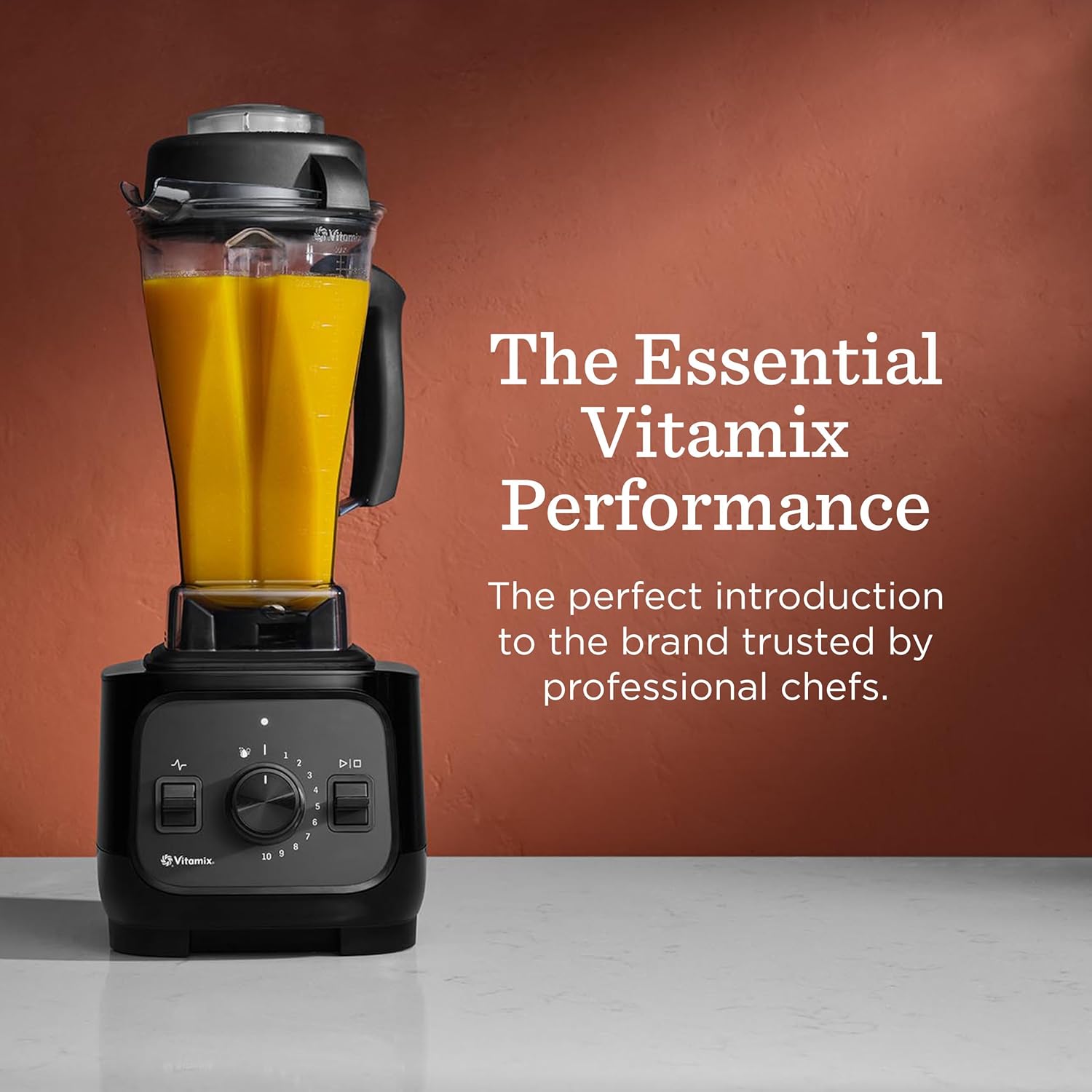
Classic Series (5200, 6500): The old-school tall containers, manual variable-speed dials, no digital timers. The 5200 — currently around $330–$380 depending on the retailer and whether it’s a certified reconditioned unit — is the entry point into real Vitamix territory. The 6500 adds pulse and three pre-programmed blending cycles (smoothie, frozen dessert, hot soup) and sits around $430–$450.
Ascent Series (A2300, A2500, A3300, A3500): The modern, digitally enhanced line. These machines use a narrower, shorter “low-profile” container by default, which fits under most standard kitchen cabinets — a bigger deal than it sounds if you’ve ever had to drag a blender out of a cabinet for daily use. The A2300 ($450) offers manual dials plus the SELF-DETECT container-recognition system. The A2500 ($500) adds three program settings. The A3300 ($580) introduces a full touchscreen. The A3500 ($650) is the flagship: touchscreen, five built-in programs, wireless container detection, and a built-in timer display.
Explorian Series (E310, E320): Budget-tier Vitamix, starting around $250. These are real Vitamix machines — same blade design, same general build quality — but with shorter warranty periods and no path to the Ascent accessory ecosystem. They’re worth knowing about, but they fall slightly outside the $330–$650 core discussion here.
By the Numbers:
| Model | Motor (HP) | Container | Programs | Approx. Price (May 2026) | Tier |
|---|---|---|---|---|---|
| 5200 Classic | 2.0 | 64 oz tall | 0 | ~$340 | Cleanblend — $178.97 |
| 6500 Classic | 2.2 | 64 oz tall | 3 | ~$440 | Vitamix — $447.50 |
| A2300 Ascent | 2.2 | 64 oz low-profile | 0 | ~$450 | Vitamix — $447.50 |
| A2500 Ascent | 2.2 | 64 oz low-profile | 3 | ~$500 | Vitamix — $447.50 |
| A3500 Ascent | 2.2 | 64 oz low-profile | 5 + timer | ~$650 | Vitamix — $449.00 |
Source: Vitamix Corporation, “Ascent Series & Classic Series Spec Sheets,” manufacturer documentation, 2025. Pricing aggregated from major retailer listings as of May 2026.
The Three Splits That Actually Decide Your Purchase
Split 1: Classic Container vs. Low-Profile
Here’s the uncomfortable truth that most comparison articles bury: every current full-size Vitamix in the $330–$650 range runs the same 2.2 HP motor (the 5200 is the lone exception at 2.0 HP, and in real-world blending that gap is marginal). The motor war is a distraction. The container geometry is the actual differentiator.
The Classic 64-oz tall container — the one that comes with the 5200 and 6500 — has a narrow, elongated profile. Owners consistently report that it creates a more aggressive vortex that excels for high-volume, liquid-rich blends: big green smoothies, soups, and nut milks. The tradeoff is height (it doesn’t fit under most cabinets with the lid on) and the fact that small-batch blends — single-serving smoothies under 16 oz — can cavitate (create an air pocket around the blades) without the tamper.
The Ascent low-profile 64-oz container is shorter and wider. It fits under cabinets, which sounds trivial until it becomes the reason you actually use the blender every morning instead of leaving it on the counter like a monument. In its blender coverage, Wirecutter (New York Times, “The Best Blenders,” updated 2025) identifies cabinet clearance as one of the most consistently cited friction points for daily-use compliance. The low-profile container also handles smaller batches more reliably because the wider base keeps ingredient-to-blade contact more consistent.
The practical decision rule: If daily single-serving smoothies are your primary use case, lean Ascent. If you’re batch-blending for meal prep, large smoothie bowls, or hot soups frequently, the tall Classic container’s vortex dynamics give it an edge — and you can always purchase the low-profile container separately (around $150) if you own the 5200 or 6500.
Split 2: Programs and Timers — Real Utility or Feature Creep?
The A2500 and A3500’s pre-programmed blending cycles (smoothie, frozen dessert, hot soups, dips/spreads, self-clean) are genuinely useful for one specific type of user: anyone who needs a consistent, repeatable product. If you’re running a meal-prep business, producing smoothie packs for clients, or simply want to walk away from the blender while it finishes a cycle without monitoring it, built-in timers and programs remove a real cognitive load.
For the serious personal-nutrition optimizer — someone already adjusting blend time based on ingredient stack (harder adaptogens like ashwagandha root powder need more time than whey protein blends) — the manual variable speed dial of the 5200 or A2300 arguably gives more granular control. You’re not locked into a manufacturer’s programmed ramp curve.
Bon Appétit’s buying guide (“The Best Blenders for Every Kind of Cook,” 2025) notes that for most home users, auto-programs deliver consistently smooth results without the learning curve of speed ramping — which is the honest case for spending the extra $150 between the A2300 and the A3500.
The honest tradeoff: Programs are worth it if you value consistency and hands-off operation. They are not worth it if you enjoy dialing in your blends manually or if you’re already comfortable with the variable-speed ramp technique.
Split 3: The Reconditioned Vitamix Play
Vitamix sells factory-reconditioned machines directly through its certified outlet program. These are returned or refurbished units that go through full quality inspection and come with a 3-year warranty (versus 7–10 years on new machines). A reconditioned 5200 runs around $230–$270. A reconditioned A2300 has been available in the $310–$350 range.
Wirecutter (New York Times, “The Best Blenders,” updated 2025) has explicitly flagged the certified reconditioned program as a strong value move, noting that the machines are functionally indistinguishable from new for blending purposes and that the reduced warranty is an acceptable tradeoff given Vitamix’s long track record of parts availability and customer service.
If your budget ceiling is $400, the decision is almost certainly a reconditioned A2300 or reconditioned 5200 rather than a new entry-level Ascent. You get the same core machine, the same blade assembly, and the same long-term serviceability at a meaningful discount. The 3-year warranty on a machine that owners regularly run for 10–15 years is not a material risk.
Who Should Buy What: The Decision Framework
The Daily Single-Serve Smoothie Maker
Use case: One daily personal smoothie (16–24 oz), standard cabinet clearance, prefers set-it-and-walk-away convenience.
The pick: A2500 Ascent (~$500 new, ~$370–$400 reconditioned).
The low-profile container handles single-serve batches cleanly without cavitation, the three programs cover 90% of daily use, and the SELF-DETECT system future-proofs you if you later want to add the 20-oz personal cup container. Consumer Reports’ “Blender Ratings & Buying Guide” (2025 edition) consistently places the mid-tier Ascent models at the top of its high-performance blender category for household daily use, citing blend consistency across a range of ingredient textures as the primary differentiator from lower-tier machines.
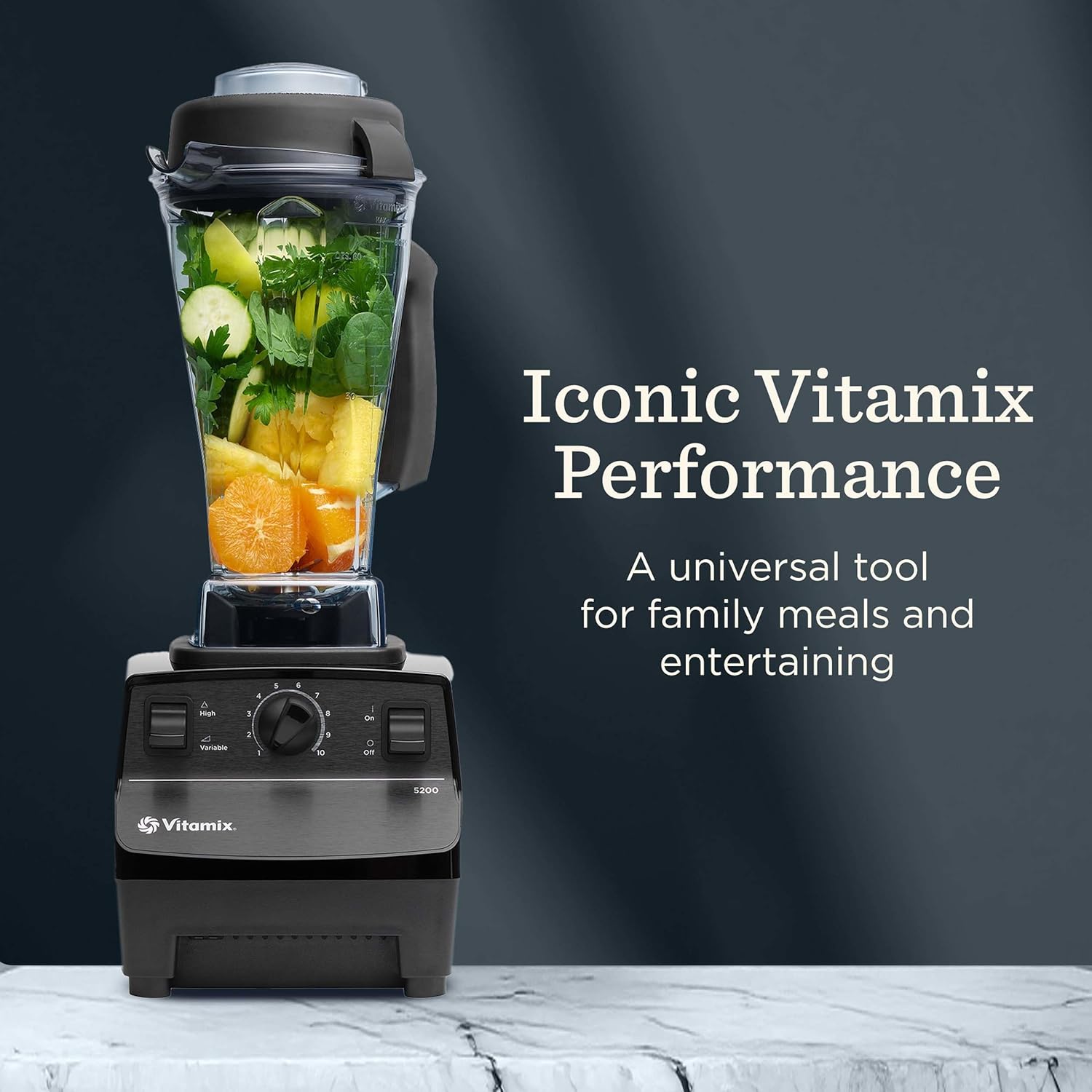
Vitamix
$447.50
In stock on Amazon
Check price on AmazonThe Serious Batch Prepper
Use case: Batch-blending 3–5 days of prep weekly, regularly processing dense ingredient stacks (frozen beets, whole dates, fibrous greens), prioritizes motor performance over smart features.
The pick: 5200 Classic (~$340 new, ~$240 reconditioned).
The 2.0 HP motor is marginally lower than the 2.2 HP models, but owners who have run the 5200 daily for years consistently report no meaningful performance gaps in real-world smoothie use. The tall container’s vortex is a genuine advantage for large-batch, liquid-rich blends. Serious Eats (“The Best Blenders, Tested and Reviewed,” 2025) notes that the Classic 5200’s tall jar geometry produces a more aggressive blending vortex that is particularly effective when processing full 48–64 oz loads with significant frozen or fibrous content. Spend the savings from the lower entry price on a second container.
Cleanblend
$178.97
In stock on Amazon
Check price on AmazonThe High-Volume or Multi-User Kitchen
Use case: Small smoothie bar, meal-prep delivery service, or a household where multiple people use the machine daily with minimal training.
The pick: A3500 Ascent (~$650).
The five built-in programs, touchscreen, and full timer display reduce user error and create a repeatable product without relying on operator skill. Serious Eats (“The Best Blenders, Tested and Reviewed,” 2025) consistently positions the A3500 as the pick for users who want the machine to handle the technique rather than developing it themselves. The 10-year warranty on a machine used at near-commercial frequency is a meaningful consideration that doesn’t appear in single-use cost comparisons.
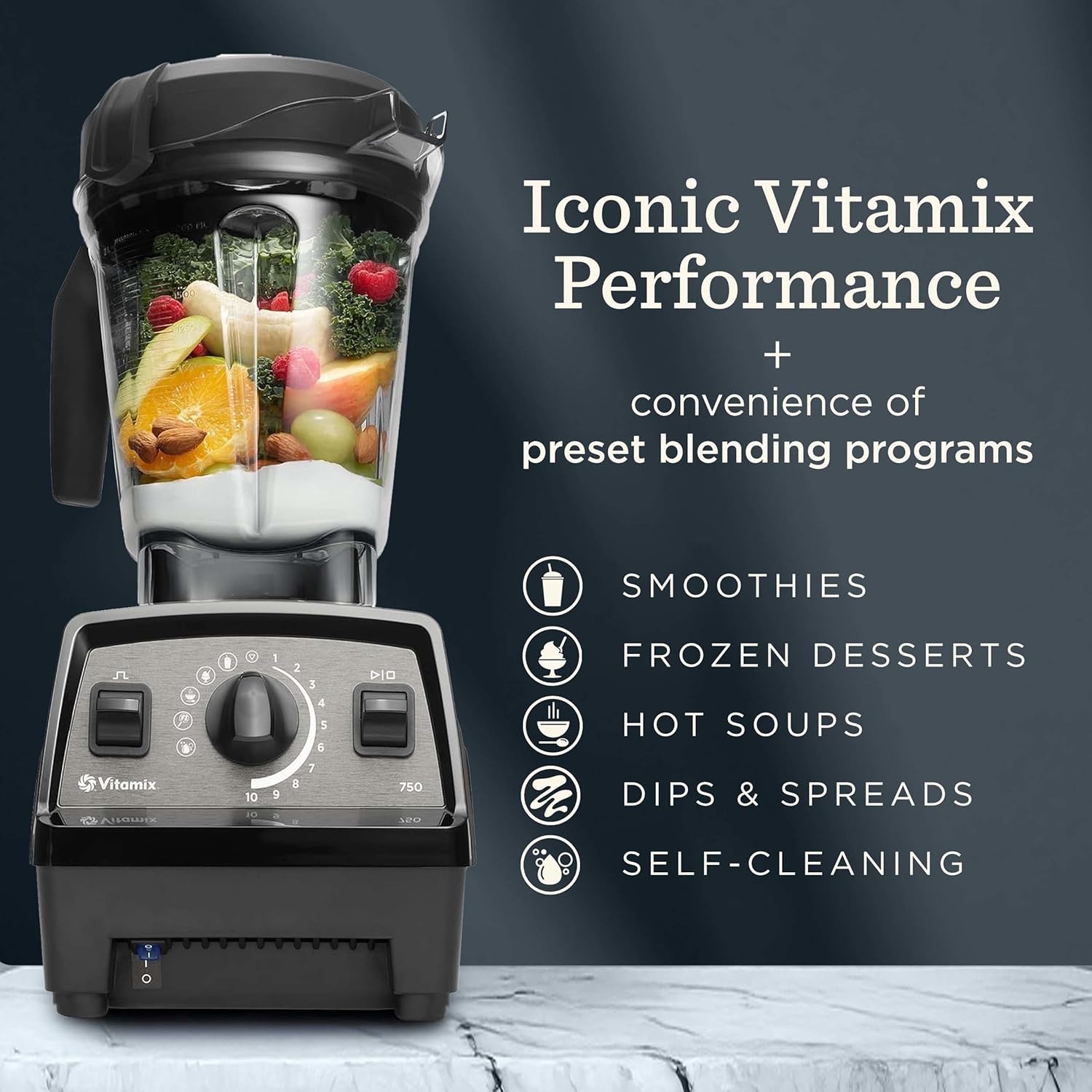
Vitamix
$449.00
In stock on Amazon
Check price on AmazonThe One Thing Most Comparisons Get Wrong
Nearly every Vitamix comparison article focuses on motor horsepower as the key differentiator. It isn’t — not within the current $330–$650 full-size lineup. Per Vitamix Corporation’s published specifications (“Ascent Series & Classic Series Spec Sheets,” 2025), every full-size model above the 5200 runs the same 2.2 HP peak motor. The real differentiators are container geometry (tall versus low-profile), the accessory ecosystem (Ascent models support the personal cup and food processor bowl; Classic models do not), and the control interface.
The case for the A3500 at $650 is not a better motor. It’s a complete, future-proofed platform: touchscreen controls, five programs, wireless SELF-DETECT that works with every current Vitamix accessory container, and a 10-year warranty on a machine owners routinely run daily for a decade. If you’re going to use it every single day and want the machine to outlast two kitchen renovations, the cost-per-use math genuinely favors the flagship.
The case for the reconditioned 5200 at $240 is simpler: it’s the same category-defining performance at roughly the price of a mid-range blender from a competing brand. For a single person optimizing their morning nutrition stack, that’s often the most rational buy in the entire lineup.
Pick your use case. Match the container geometry. Let the price follow the decision — not the other way around.