If you’ve ever stood at a juice bar counter, watched someone blend a 16-ounce drink for ninety seconds, and then handed over $14 before tax and tip — you’ve done the mental math. Could I make this at home for less? The short answer is yes, usually by a wide margin. But the more useful answer requires unpacking what you’re actually paying for in each scenario, because the cost difference isn’t just about the markup on frozen mango. A significant chunk of a juice-bar smoothie’s price is driven by superfood powders — concentrated, nutrient-dense additions like spirulina, mushroom extracts, plant-based protein blends, and adaptogen mixes (adaptogens are herbs and fungi marketed for stress response and recovery). These powders are expensive per ounce at retail, but become cost-effective quickly once you understand the per-serving math. This article breaks down exactly what you’re paying, where the real savings live, and when the juice bar is actually the better call.
The Juice Bar Pricing Model and Why It Doesn’t Scale the Way You Think
The Bureau of Labor Statistics Consumer Price Index for Food Away from Home, tracked through early 2026, shows that quick-service specialty beverage prices have risen roughly 28% since 2022. A premium superfood smoothie at a mid-market juice chain — a 16-ounce blend with one protein powder, one adaptogen, and a base of banana and almond milk — now retails between $13 and $17 in most major U.S. metro areas before any add-on boosters.
The markup structure for that drink typically breaks down like this:
- Ingredients (raw cost to the operator): $2.50–$4.00
- Labor, overhead, rent, and equipment amortization: $5.00–$8.00
- Margin: $3.00–$5.00+
Operators buying Sunwarrior Warrior Blend plant protein in commercial quantities pay a fraction of what a retail consumer pays. A household purchasing the same product in a single 750g container pays closer to $1.20–$1.40 per serving at standard retail pricing. The juice bar isn’t gouging you on ingredients. It’s charging you for the full service infrastructure around them.
That context matters, because it reframes the home-blending calculus correctly: you’re not just saving on the markup, you’re eliminating the overhead layer entirely. That’s where the real gap lives.
Breaking Down the Home Cost-Per-Serving
Let’s build a realistic premium superfood smoothie and price it honestly — the kind of blend a performance-nutrition optimizer would actually make: plant protein, a functional mushroom extract, a healthy-fat powder, frozen fruit, and a liquid base.
Example build: “Recovery Stack” smoothie
| Ingredient | Product Reference | Serving Size | Cost Per Serving |
|---|---|---|---|
| Plant protein (25g) | Sunwarrior Warrior Blend, 750g bag | 1 scoop | $1.25–$1.40 |
| Functional mushroom blend | Four Sigmatic Mushroom Elixir (Lion’s Mane) | 1 packet (2g) | $2.50–$3.00 |
| Healthy-fat powder | Laird Superfood Unsweetened Creamer | 2 tbsp | $0.55–$0.70 |
| Frozen mixed berries | Store-brand, 32oz bag | ~¾ cup | $0.60–$0.85 |
| Frozen banana (½) | Bought fresh, frozen at home | ½ medium | $0.10–$0.15 |
| Unsweetened almond milk | 1 cup | — | $0.25–$0.35 |
| Total | $5.25–$6.45 |
A genuinely premium superfood smoothie — with the same ingredients a juice bar would charge $15+ for — lands at roughly $5.50–$6.50 at standard retail pricing, and drops closer to $4.50–$5.50 if you source through Thrive Market membership pricing or iHerb’s frequent discount cycles on superfood powders.
That’s a $7–$10 delta per serving. At five smoothies a week, that’s $1,820–$2,600 in annual savings versus buying the equivalent product at a juice bar. The math is not subtle.
Where the Real Powder Cost Lives
Here’s where practitioners tend to underestimate: the functional powder category is doing most of the heavy lifting on cost. Your frozen fruit is $0.60–$0.85 per serving regardless of optimization. Your liquid base is negligible. But your powder stack can range from $0.80 (basic whey protein) to $5.00+ per serving for high-end adaptogen blends with dual-extract mushroom ratios and third-party lab testing.
Healthline’s editorial overview, “Are Superfood Powders Worth It?”, notes that the term “superfood” has no regulatory definition in the U.S. — it’s a marketing category, not a nutrition standard. That matters when evaluating price because it means you’re always making a judgment call about whether a premium reflects genuine bioavailability data or primarily reflects branding.
A few cost-optimization principles that hold up across the powder landscape:
Buy on a cost-per-gram-of-active-ingredient basis, not cost-per-container. Four Sigmatic’s single-serve mushroom packets are convenient and shelf-stable but cost roughly $2.75 per 2g serving. Their bulk powder format drops that to approximately $1.60–$1.80 per serving at May 2026 pricing tracked on iHerb — the same product at a 35–40% cost reduction.
Thrive Market membership consistently outperforms iHerb on branded superfood powders by 15–25%. For a household blending five or more times per week, the annual Thrive membership pays for itself within the first three or four powder orders. iHerb’s advantage is breadth — it stocks harder-to-find single-ingredient powders (ashwagandha, astragalus, baobab) that Thrive doesn’t carry at comparable depth.
Frozen fruit is the one category where pricing data argues for conventional sourcing. The USDA Agricultural Marketing Service’s retail fruit price averages show that store-brand 32oz frozen mixed-berry bags at conventional grocery chains have held relatively flat at $5.50–$7.00 per bag despite broader food inflation — still the best value-per-macronutrient item in a typical smoothie build. Buying premium flash-frozen fruit from specialty suppliers adds meaningful cost without changing the nutritional profile for most smoothie applications.
Comparing Your Three Realistic Tiers
This is where the commercial-comparison math becomes most useful. Not everyone is building the full Recovery Stack above. Here’s how the cost-per-serving picture shifts across three realistic home-blending profiles.
Budget Tier: Fruit-Forward with Basic Protein
A budget home smoothie prioritizes frozen fruit, a mid-shelf whey or plant protein (generic store-brand or NOW Sports-level pricing available on iHerb), oat milk or water as the base, and no functional powders. Cost-per-serving lands at $1.80–$2.80 depending on protein type and fruit quantity. Equipment in this tier is typically a personal-cup blender. Wirecutter, the New York Times product-testing division, consistently notes in its blender coverage that personal-cup blenders at this price point perform well for standard smoothie inputs but show the most texture variance with thick or oily additions like nut butters and dense plant proteins.
Versus a juice-bar basic protein smoothie at $9–$11: savings of $6–$8 per serving.
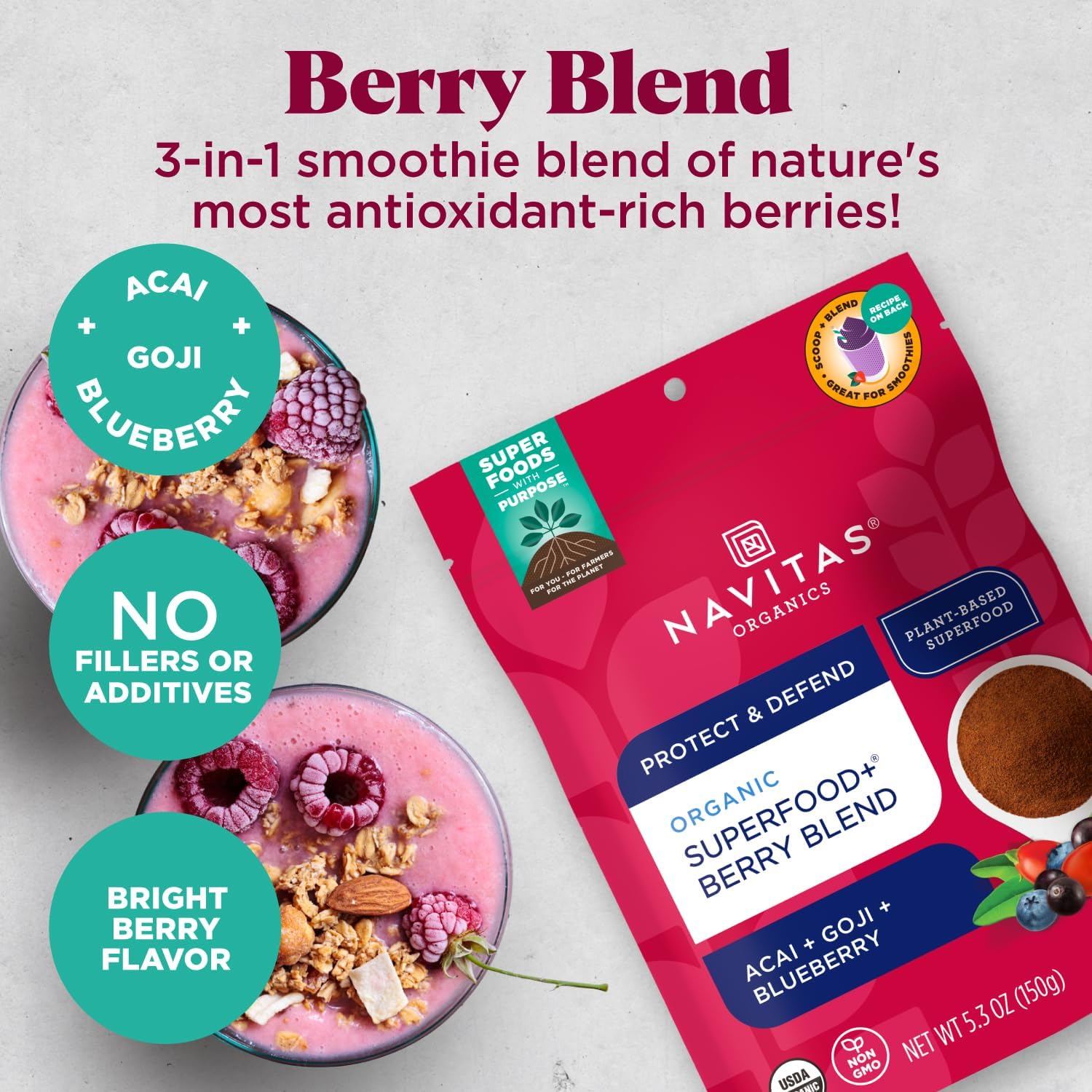
Navitas
$13.25
In stock on Amazon
Check price on AmazonMid-Tier: Functional Powders Plus Whole-Food Additions
The mid-tier home blend adds one functional powder — typically a mushroom extract like Four Sigmatic Lion’s Mane bulk powder or an adaptogen blend — alongside a quality plant protein and a whole-food fat source (frozen avocado or nut butter rather than a creamer powder). Cost-per-serving runs $3.50–$5.00 depending on powder selection and buying channel. A full-size countertop blender in the $150–$250 range handles this stack well. Consumer Reports blender ratings identify models in this price band as capable of processing nut butters and dense protein powders without stalling under normal batch conditions, though high-fiber builds still show occasional chunking relative to higher-wattage options.
Versus a juice-bar equivalent with one functional booster at $13–$16: savings of $8–$12 per serving.
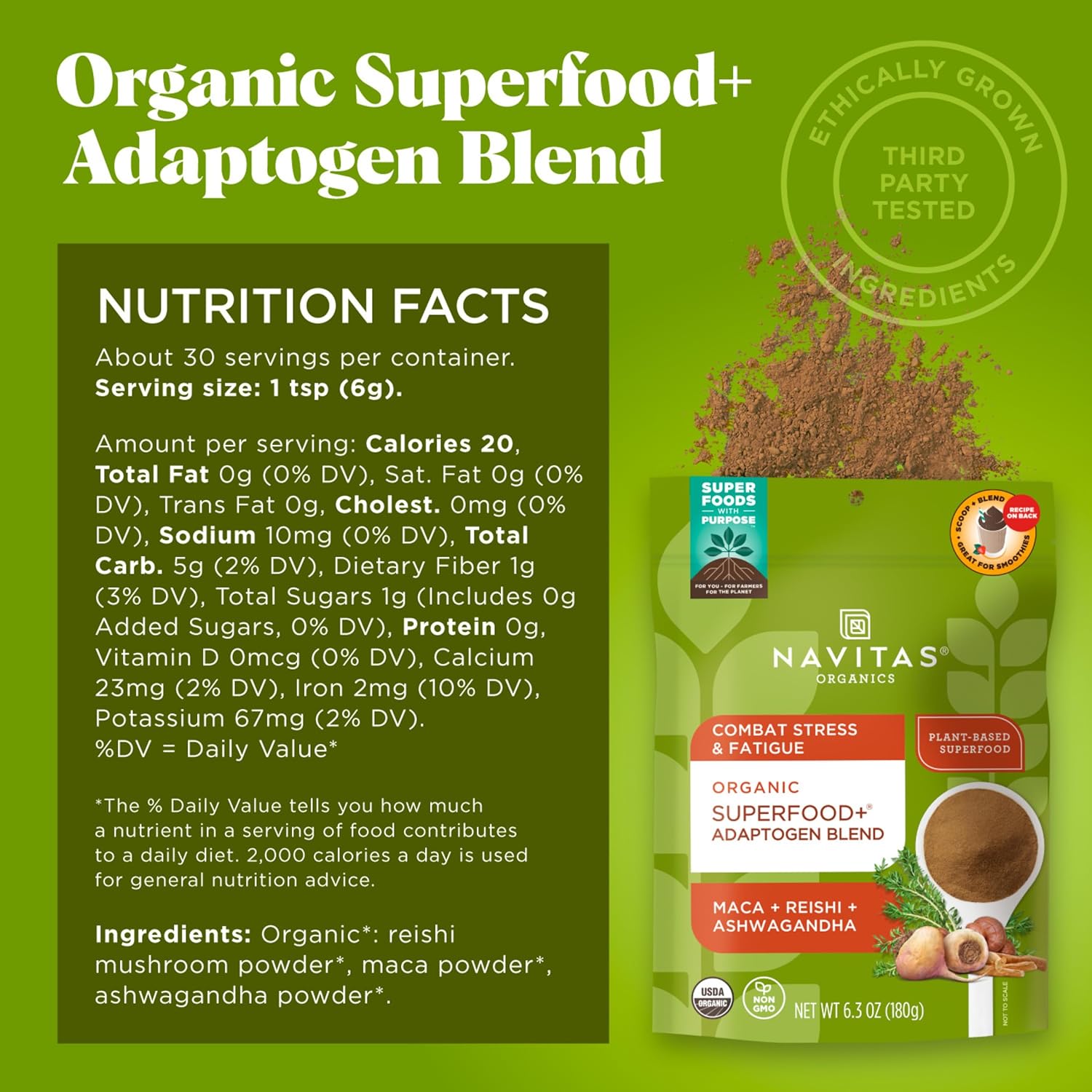
Navitas
$13.25
In stock on Amazon
Check price on AmazonPremium Tier: Full Superfood Stack with Professional Blending
The premium home blend is the full Recovery Stack profiled above: Sunwarrior plant protein, Four Sigmatic mushroom extract, Laird Superfood Creamer, quality frozen fruit, and a nut or oat milk base. Cost-per-serving at Thrive Market pricing runs $4.50–$5.75. At this tier, blender performance becomes a meaningful variable. Wirecutter, the New York Times product-testing division, identifies the Vitamix Ascent Series as its leading recommendation for heavy-use home blending — specifically citing motor durability and container design as differentiators over multi-year use. Consumer Reports testing also flags Vitamix Ascent models as top-tier options for duty cycle and powder integration.
The Blendtec Designer Series is a strong alternative for powder-heavy builds. Its square FourSide container geometry is credited in long-run user reviews for reducing dead zones where dense powders like pea protein isolate can cake at the blade base. At $500–$700 for a Vitamix Ascent, amortized over the manufacturer’s stated 10-year motor warranty, equipment adds roughly $50–$70 per year to your cost — a rounding error against juice-bar spend.
Versus a juice-bar premium superfood smoothie at $15–$18: savings of $9–$13 per serving.
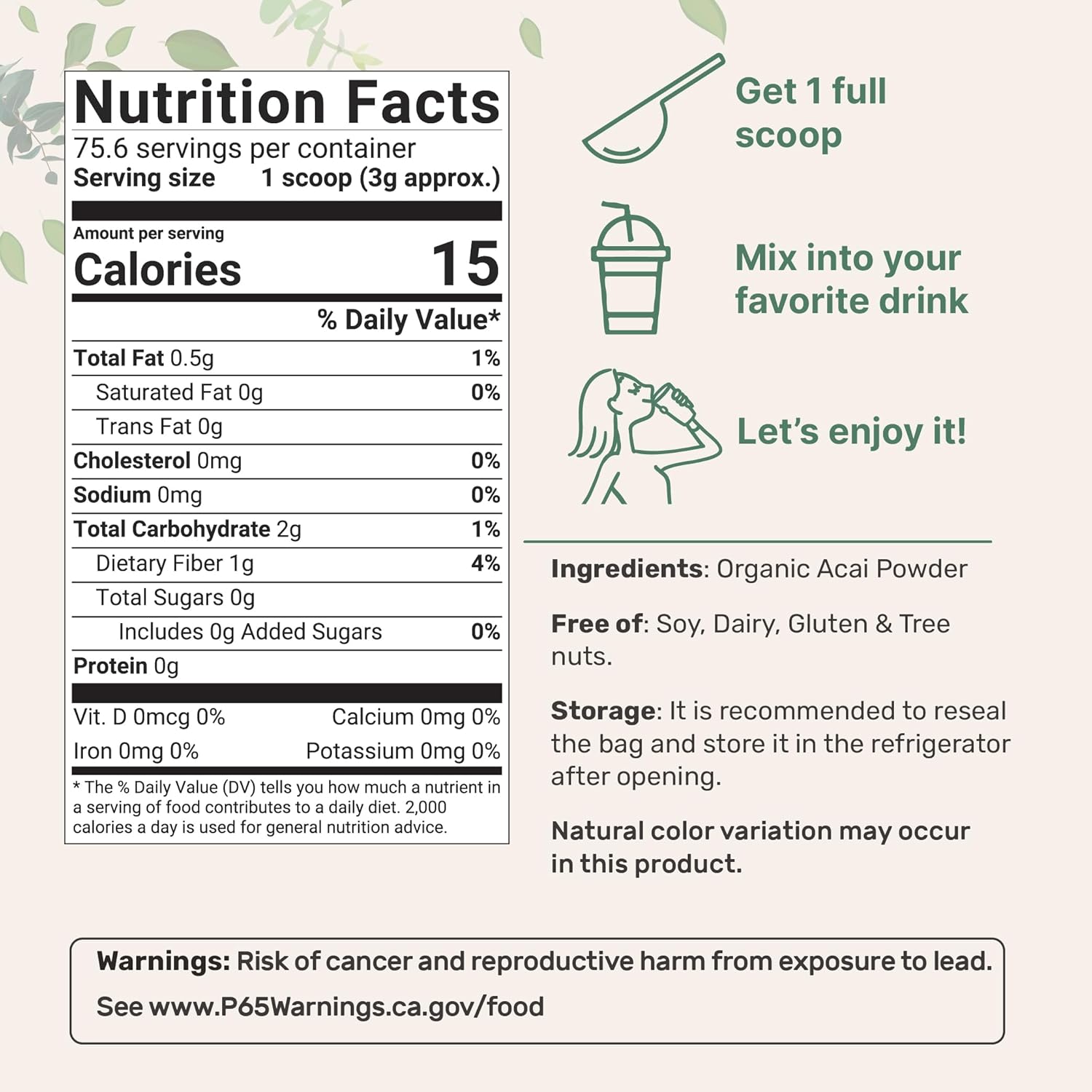
Organic
$29.99
In stock on Amazon
Check price on AmazonEquipment’s Role in the Long-Run Cost Equation
Most cost-per-serving analyses skip equipment amortization. It deserves a direct number.
A $15 smoothie purchased five times a week is a $3,900 annual line item. A $650 Vitamix Ascent, amortized over 10 years, adds $65 per year. A $150 mid-range blender, with a realistic 2–3 year heavy-use lifespan, adds $50–$75 per year. Either way, equipment cost is a minor variable in the total calculus — it affects your break-even timeline, not your ultimate savings rate.
The practitioner question is therefore less “is the Vitamix worth it financially?” and more “does my powder stack and batch volume justify the jump?” If you’re blending dense plant proteins, mushroom extracts, and nut butters daily, the guidance from both Wirecutter (New York Times product-testing division) and Consumer Reports is consistent: wattage above 1,400 watts produces measurably smoother results with those specific inputs, and the Vitamix Ascent Series remains the primary recommendation at that performance level for home use.
When the Juice Bar Is Actually the Right Call
This analysis would be incomplete without an honest counterargument.
Convenience is a real cost. If buying at a juice bar means you actually consume a nutrient-dense meal and skipping it means you don’t, the $14 drink delivers value the $5.50 home blend doesn’t — because the home blend never happened.
Formulation knowledge has a learning curve. A first-time superfood-powder buyer purchasing Four Sigmatic, Laird, and Sunwarrior in the same week is looking at $120–$180 in upfront inventory before confirming they like the flavor profiles, tolerate the mushroom extracts, and have dialed in the right powder-to-liquid ratios for their blender and palate. The juice bar is a $14 trial run. Spending $40–$60 across three or four juice-bar visits to test ingredient combinations before committing to bulk purchasing is a legitimate strategy — not a waste.
The “superfood” premium deserves scrutiny either way. As Healthline’s editorial overview “Are Superfood Powders Worth It?” notes, the category carries no regulatory definition in the U.S., which means evaluating price always requires a judgment call about what the premium is actually buying. That’s true whether you’re choosing a powder on iHerb or ordering a booster shot at a juice counter.
The Decision Rule
Blending four or more times per week with a known powder stack? The home math is unambiguous. You recoup a $650 Vitamix Ascent in under six months against equivalent juice-bar spend, and your ongoing cost-per-serving runs 55–65% lower than retail.
Still calibrating your stack? Use three to five juice bar visits as paid experiments. Lock in your formula. Then buy bulk through Thrive Market or iHerb and don’t look back.
Operating a smoothie bar or meal-prep service? The analysis shifts: your savings come from bulk ingredient purchasing and keeping food cost below 28–32% of menu price, not from eliminating overhead — because you are the overhead. At that volume, direct wholesale accounts with Sunwarrior and Laird Superfood, and Thrive Market’s business tier, are the conversations worth having.
The juice bar’s $14 smoothie isn’t a scam. It’s a service with a fair price for what it delivers. But if you’re blending regularly and willing to spend thirty minutes calibrating your stack, the numbers confirm that home-blending wins on every financial metric that matters.