You’ve probably seen “greens powder” on ingredient labels at your local smoothie bar or stacked three deep in the supplement aisle — and the pitch is always the same: one scoop, instant nutrition. But here’s the thing nobody on the label explains: which greens powder you add, what you combine it with, and when you add it to your blender all change what your body actually absorbs. “Greens powder” is a category, not a single ingredient — it covers everything from single-source spirulina (a blue-green algae sold as a fine powder) to complex proprietary blends that might contain a dozen dehydrated vegetables, adaptogenic mushrooms, and digestive enzymes in one scoop. This guide is for the blender owner who’s moved past “just add a scoop and hope” and wants to stack intelligently — choosing the right powders, pairing them with the right co-ingredients, and avoiding the most common mistakes that quietly tank both flavor and nutrient uptake.
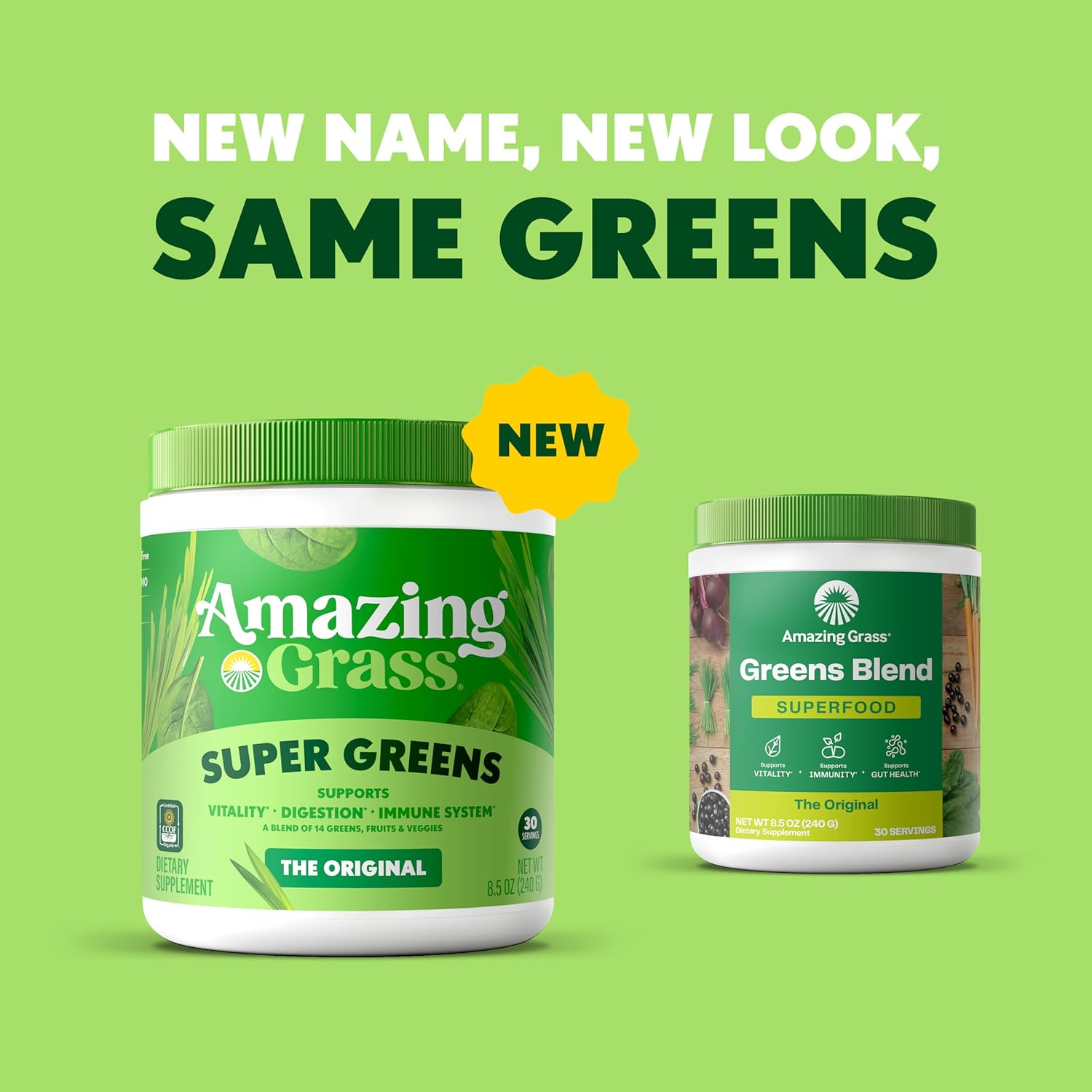
| EDITOR'S PICK[HEALTHFORCE SUPERFOODS Vitamine…](https://www.amazon.com/dp/B01E58PHTQ?tag=greenflower20-20) | Mid-tier[Amazing Grass Super Greens Powd…](https://www.amazon.com/dp/B0038B3AAK?tag=greenflower20-20) | Budget pick[Country Farms Organic Super Gre…](https://www.amazon.com/dp/B011D76R82?tag=greenflower20-20) | |
|---|---|---|---|
| Servings | — | 30 | — |
| Weight | 500g | 8.5oz | — |
| Organic | — | ✓ | ✓ |
| Vegan | ✓ | — | — |
| Gluten-free | ✓ | — | — |
| Price | $82.95 | $22.99 | $17.99 |
| See on Amazon → | See on Amazon → | See on Amazon → |
What “Stacking” Actually Means — and Why It’s Not Just Mixing More Stuff In
Stacking, in the smoothie context, means intentionally layering ingredients so they enhance each other’s function rather than just adding up by weight. Think of it the way a performance cook thinks about seasoning: salt added at three different stages does something different than salt added all at once at the end. The same logic applies to greens powders.
The practical framework has three variables:
1. Bioavailability pairing — some nutrients require specific co-ingredients to be absorbed efficiently. Fat-soluble compounds (like the beta-carotene in dehydrated kale or carrot powders) need dietary fat present at the same meal. A 2021 review published in Nutrients confirmed that polyphenol absorption is measurably improved when consumed alongside lipid sources. That means your wheatgrass-only blend in water is delivering a fraction of what the label implies. Add half an avocado or a tablespoon of flaxseed oil, and you’re now eating the same scoop very differently.
2. Antagonist pairs — some ingredients actively compete. The most consequential example for greens blends: calcium and non-heme iron (the plant-derived iron in spinach powder, moringa, and spirulina) compete for the same intestinal absorption pathway. Per EatRight.org’s Academy of Nutrition and Dietetics guidance on iron absorption, high-calcium ingredients consumed at the same time can reduce non-heme iron uptake by 30–50%. If iron optimization is a priority — relevant for endurance athletes and menstruating women especially — separating high-calcium protein powders from iron-rich greens by a few hours is worth the logistics.
3. Blending order and heat sensitivity — certain bioactive compounds in greens powders, particularly enzymes and chlorophyll-adjacent pigments, degrade when exposed to friction heat from extended high-speed blending. This matters more on high-performance machines (Vitamix A3500, Blendtec Designer 725) running full cycles than on a NutriBullet Pro at its single-cycle limit. Practical rule: add enzyme-containing greens powders (look for “digestive enzyme blend” on the label) after your main blend cycle, with a 10-second final pulse rather than a 60-second continuous run.
The Four Greens Powder Categories and How to Position Each One
Most products on the market fall into one of four functional categories. Understanding which category you’re buying matters more than brand loyalty.
Category 1: Single-Source Algae (Spirulina, Chlorella)
These are the densest in protein per gram of any plant-derived powder — spirulina runs roughly 57–60g protein per 100g dry weight, per Examine.com’s spirulina compound summary. They’re also the most flavor-forward (read: funky) and the most pH-sensitive. Both spirulina and chlorella taste significantly more palatable in slightly acidic blends. Frozen mango, pineapple, or a half-lemon squeezed in before blending will mask bitterness without adding meaningful sugar load.
Stack pairing that works: 1 tsp spirulina + ½ cup frozen mango + 1 tbsp hemp seeds (fat for bioavailability) + unsweetened coconut milk. This is a complete macro scaffold: protein from the spirulina and hemp, fat from hemp and coconut, natural sugars from mango.
What to avoid: Combining spirulina with high-calcium dairy or high-tannin fruits (pomegranate, blueberry in large quantities) in the same blend. Healthline’s overview of chlorophyll and chlorella health evidence notes that absorption studies consistently show better outcomes with lower-competition ingredient environments.
Category 2: Dehydrated Vegetable and Grass Blends (Wheatgrass, Barley Grass, Kale, Spinach Powders)
These are the most common component of multi-ingredient “superfood greens” products like Sunwarrior Ormus Greens, which is built primarily on a grass and sea vegetable base. Per Sunwarrior’s product documentation, Ormus Greens uses a low-temperature drying process specifically to preserve enzymatic activity — which is the processing detail that separates a premium grass powder from commodity bulk product.
These powders are relatively mild in flavor compared to algae but thinner in protein density. Their primary contribution is micronutrients (magnesium, vitamin K, folate) and chlorophyll. Stack them where you want nutrition density without dramatically altering the protein profile of your blend.
Stack pairing that works: 1 scoop dehydrated greens blend + 1 cup frozen spinach (yes, doubling down on greens is fine — fresh spinach and dehydrated spinach powder have different micronutrient profiles because of processing) + ½ frozen banana + 1 tbsp almond butter + oat milk.
Category 3: Adaptogenic and Functional Greens (Moringa, Ashwagandha-adjacent blends, Mushroom-greens hybrids)
This is the highest-variance category. Products like Four Sigmatic’s plant protein blends fold lion’s mane or reishi into a greens base, creating a dual-function ingredient. The evidence base for adaptogens is genuinely more limited than for the algae or grass categories, and honest label reading matters here: look for standardized extract percentages (e.g., “10% withanolides” for ashwagandha) rather than proprietary blend weights that obscure active dosages.
Moringa deserves its own callout: it’s the most nutritionally dense of the common greens powders on a per-gram basis for iron and vitamin C simultaneously — and vitamin C dramatically enhances non-heme iron absorption. Moringa is, unusually, a self-stacking ingredient. A 2-tsp serving in a citrus-forward blend is arguably the single most efficient greens move for iron uptake without adding a separate ascorbic acid supplement.
Category 4: Proprietary Multi-Blend Products (Athletic Greens / AG1-style, Laird Superfood Greens)
These products are engineered for completeness — they’re trying to be a nutritional net rather than a targeted spike. Laird Superfood’s greens formulation notes on their label disclosures emphasize the inclusion of functional mushrooms and fatty acid sources (coconut milk powder) intentionally baked into the blend itself, which is a smart design decision because it partially addresses the fat co-ingestion problem internally.
The tradeoff: proprietary blends are harder to stack precisely because you don’t know the exact dosage of any individual ingredient. If you’re a macro optimizer tracking iron or iodine intake, a complete blend gives you estimates, not exact numbers. Single-source powders give you control.
By the Numbers: Stacking Impact on Protein and Fat Pairing
| Greens Powder Type | Protein (per 10g serving) | Fat Co-Ingredient Needed? | Iron Competition Risk |
|---|---|---|---|
| Spirulina (pure) | ~5.7g | Yes (fat-soluble pigments) | Moderate |
| Chlorella (pure) | ~5.8g | Yes | Moderate |
| Wheatgrass powder | ~0.8g | Minimal | Low |
| Moringa leaf powder | ~2.7g | Yes | Low (self-pairs with vitamin C) |
| Proprietary multi-blend | ~1–3g (varies) | Partially built-in | Varies by formula |
Equipment Context: Does Your Blender Change the Equation?
Yes, and specifically in two ways.
Friction heat at high-cycle blending: On a Vitamix A3500 or Blendtec Designer 725 running a 60-second full-power blend, the blade friction generates enough heat to measurably degrade heat-sensitive enzymes. This is not a theoretical concern — it’s the engineering reason cold-blend and “raw” smoothie advocates lower blend duration on premium machines. The fix is straightforward: add enzyme-sensitive powders (any product specifying live enzymes on the label) in the final 10 seconds of blending, not at the start.
Owners of entry-level personal blenders like the NutriBullet Pro report fewer issues here simply because the motor runs shorter cycles at lower sustained RPM. The irony is that the less powerful machine is gentler on delicate compounds. That’s not a reason to downgrade — the Vitamix’s superior ice-breaking and emulsification produce a demonstrably smoother texture that improves palatability for thick greens blends — but it is a reason to modify technique.
Container geometry and powder incorporation: Narrow-bottomed personal blender cups (the NutriBullet format) create a tighter vortex that incorporates fine powders more efficiently in small volumes (12–16 oz). Wider Vitamix containers with larger batch volumes (32+ oz) can leave pockets of unincorporated powder at the shoulder of the container if the liquid-to-solid ratio is wrong. If you’re running a Vitamix A3500 with a single-serving greens blend, use the 20 oz personal cup if your model supports it, or add liquid first, then powder, then frozen ingredients — in that order — to establish the vortex before the powder has to fight frozen chunks.
The Decision Rule: If X, Then Y
You don’t need to optimize every variable simultaneously. Here’s the prioritized decision frame:
If your primary goal is iron optimization (endurance athletes, iron-deficient profiles): Use moringa as your base greens powder, blend with a citrus ingredient (fresh lemon juice or orange segments), and keep calcium-rich dairy protein powders in a separate meal window. This is the highest-impact single change you can make.
If your primary goal is protein density from greens: Spirulina or chlorella is your foundation. Pair with a fat source (hemp seeds, flaxseed oil, avocado) in every blend. Expect flavor compromise unless you’re pairing with strong tropical fruit.
If your primary goal is micronutrient breadth with minimal formulation effort: A quality proprietary blend (Laird Superfood Greens or the Sunwarrior Ormus category) is the right call. You’re trading precision for convenience, and that’s a legitimate trade.
If you’re running a high-performance blender (Vitamix, Blendtec) and using enzyme-rich powders: Always add those powders in the last 10 seconds. Protect what you paid for.
If you’re scaling for a smoothie bar or batch prep context: Single-source powders sourced through Thrive Market or iHerb give you cost control and formula consistency that proprietary blends don’t. Spirulina and moringa in bulk are significantly more cost-efficient per gram of active compound than finished multi-blend products at smoothie-bar volumes.
The bottom line is that greens powder stacking is less about finding the “best” powder and more about matching the powder’s functional profile to your specific nutrition gap — and then building the blend architecture around it. Get the pairing logic right, and a single ingredient shift can meaningfully change what your body actually receives from the same morning blend you’re already making.