If you’ve ever blended a beautifully optimized smoothie at home — fresh spinach, frozen mango, a scoop of protein powder — only to pour it into a leaky, funnel-shaped bottle that arrives at your desk separated into sad liquid layers, you already understand why the container matters almost as much as the recipe. A shaker bottle is simply a portable, sealable vessel designed to mix, carry, and dispense blended or powdered drinks without requiring a plug-in appliance. At the basic level, that’s just a plastic cup with a lid. But once you start taking your nutrition seriously — tracking macros (the breakdown of protein, carbohydrates, and fats in your diet), dialing in pre-workout timing, or carrying dense superfood blends that include ingredients like spirulina powder or collagen peptides — the specs of that bottle stop being trivial. This guide breaks down exactly what separates a $10 drugstore shaker from a purpose-built $30–$55 vessel, and gives you a clear decision framework for which tier actually matches your workflow.
Why Shaker Bottle Specs Start Mattering After the Basics
The default shaker bottle most people own — the iconic BlenderBottle Classic, with its stainless steel wire whisk ball rattling around inside — is genuinely good for what it was designed to do: mix a dry protein powder into water or milk. That wire ball (usually called a “blending ball” or “whisk sphere”) breaks up clumps by bouncing against the powder as you shake. For a standard whey isolate mixed with water, it works fine.
The problem shows up when you start pushing past that use case:
Viscous blends don’t shake-mix well. A smoothie built on frozen fruit, nut butter, and a handful of oats has a completely different fluid dynamic than a scoop-of-powder-in-water. Per Serious Eats’ analysis of emulsification in blended drinks, suspension stability — how long your ingredients stay mixed rather than separating — depends heavily on particle size, fat content, and the mechanical energy you put into the mix. A wire ball can’t replicate the shear force of a blender blade. If you’re carrying an actual blended smoothie (already made in a Vitamix or Ninja), your bottle’s job shifts entirely: you need thermal retention, leak-proof sealing under pressure, and a mouth opening wide enough to drink thick textures without fighting the lid.
Powder sourcing has evolved. Ingredients from brands like Sunwarrior, Laird Superfood, and Four Sigmatic include adaptogens, mushroom extracts, and MCT-based creamers that clump more aggressively than plain whey. Owners on long-run review threads consistently report that basic wire-ball bottles leave visible clumps at the bottom with these denser formulations. The mixing mechanism and internal geometry both matter here.
Portability needs vary by use case. A boutique smoothie-bar operator pre-portioning 40 cups for a morning rush has completely different needs than an athlete carrying a single 24-oz shake to a gym bag. Volume options, cap style, and material durability each factor differently.
The Four Specs That Actually Drive the Decision
1. Material: Plastic vs. Stainless vs. Glass
This is the tradeoff most buyers shortcut, and it’s worth slowing down on.
BPA-free Tritan plastic (a clear, shatter-resistant polymer used by BlenderBottle, Hydra Cup, and most budget options) is lightweight, drop-tolerant, and easy to see through so you can confirm your mix. Consumer Reports’ overview of food-contact plastics notes that Tritan is considered safe for repeated use under normal conditions, though it can absorb odors over time — an issue owners consistently flag after three to six months of daily superfood blends containing turmeric or spirulina.
Double-wall vacuum-insulated stainless steel (used by YETI Rambler Shaker, Hydro Flask, and the BlenderBottle Mantra) adds meaningful thermal retention — typically keeping cold blends cold for 24 hours per manufacturer specs — at a weight and price penalty. Owners of the YETI Rambler shaker (26 oz, ~$35–$40 retail as of mid-2026) consistently report zero odor transfer and near-zero condensation on the exterior, which matters if the bottle is living in a gym bag next to electronics. The tradeoff: at roughly 12 oz empty weight, it’s noticeably heavier to carry and harder to visually confirm your mix.
Borosilicate glass bottles (Purifyou, Glass Dharma) solve the odor and taste-transfer problem entirely, but the drop-tolerance tradeoff is real and reviewers across aggregated sources are candid about it. These make sense on a desk or kitchen counter, not in a bag going to a morning workout.
Decision rule: If thermal retention and odor-neutrality are your top priorities — and you’re carrying blends with strong-flavored superfoods — go stainless. If you need to visually monitor mix consistency or you’re pre-portioning multiple bottles in a meal-prep workflow where weight adds up, Tritan plastic is the rational choice.
2. Mixing Mechanism: Wire Ball, Mixing Grid, or Agitator Disc
The standard wire whisk ball handles thin, powder-in-liquid mixes well. For anything denser, published spec comparisons and owner reports point to two better options:
Mixing grids (a fixed cross-hatch insert at the bottle’s mid-section, used by some Helimix and Contigo designs) force liquid through a structured barrier as you shake, creating more turbulence. Owners of the Helimix Vortex Blender Shaker Cup consistently cite better clump-free results with plant-based protein powders than they got with wire-ball equivalents.
Motorized mini-blenders — bottles with a rechargeable blade at the base (BlenderBottle Radian Electric, Voltrx Premium Electric) — occupy a different category entirely. These use a small impeller (a spinning blade driven by a USB-rechargeable motor) to actually blend rather than just shake. Manufacturer specs put mixing time at 30–60 seconds for a full 20-oz volume. For athletes consuming post-workout blends on the go without access to a countertop blender, they’re a reasonable bridge. They’re not a substitute for a Vitamix — the blade clearance and motor wattage are nowhere near comparable — but for a scoop of collagen peptides, a tablespoon of MCT oil, and some frozen fruit pieces, owners report usable results.
3. Volume and Opening Geometry
This one is underspecified in most buying guides but it’s a genuine workflow differentiator.
By the numbers — common shaker bottle volumes:
- 20 oz: standard single-serving, fits most car cupholders
- 28–32 oz: high-volume athlete servings, often won’t fit standard cupholders
- 45 oz: meal-prep / multi-serving, better for batch portioning than daily carry
The mouth opening diameter matters more than most buyers anticipate. Wirecutter’s shaker bottle comparison notes that wide-mouth openings (typically 2.5 inches or larger) are meaningfully easier to clean and to add thick ingredients like nut butter or frozen chunks. Narrow-mouth bottles — fine for mixing pre-portioned powder — become frustrating the moment your recipe evolves beyond powder-plus-liquid.
For smoothie-bar operators pre-filling bottles for same-day customer orders: a 32-oz wide-mouth with a leak-proof flip-top or push-pull spout is the workhorse configuration. Owners in that segment consistently cite the GNC Pro Performance and Nalgene Tritan wide-mouth as durable batch-fill options in the $10–$18 range, reserving the premium stainless options for direct-sale higher-margin items.
4. Seal Integrity and Pressure Tolerance
This is the spec that gets ignored until a smoothie explosion ruins a bag.
Seal integrity matters most when:
- Your blend contains carbonated liquid (kombucha, sparkling water)
- You’re carrying a bottle in a pressurized environment (airplane carry-on)
- The bottle gets inverted or compressed in a bag
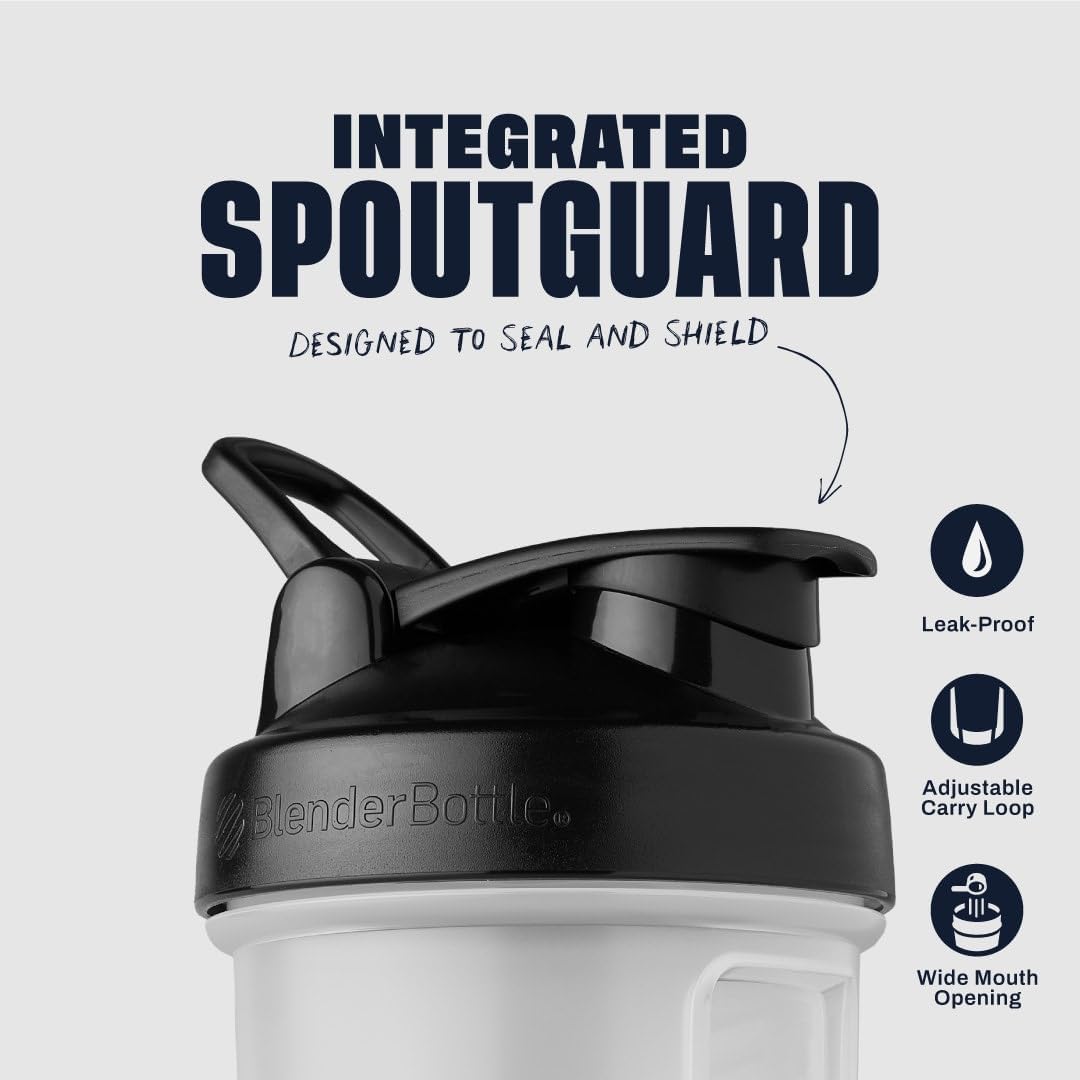
Most plastic shaker bottles use a flip-cap or screw-top with a silicone gasket. Across aggregated reviews, screw-top designs with a separate silicone O-ring (BlenderBottle Pro Series, Hydra Cup Dual Shaker) consistently outperform snap-close flip tops for leak resistance under inversion pressure. If your bottle is going into a backpack alongside a laptop, this is the spec to verify in the product listing before you buy.
The Academy of Nutrition and Dietetics’ guidance on protein timing for athletes notes that the window for post-workout protein consumption is practically a few hours, not minutes — so the real argument for a good seal isn’t urgency, it’s the bag-survival problem.
Matching Bottle Tier to Your Actual Use Case
Here’s the honest framework:
If you’re carrying a pre-blended smoothie (already made in a countertop blender): The mixing mechanism is irrelevant. You need thermal retention, a wide mouth for filling and cleaning, and a seal rated for inversion. This points squarely at double-wall stainless — YETI Rambler Shaker, Hydro Flask Wide-Mouth with Straw Lid, or similar in the $35–$55 range.
If you’re mixing powder on-site (at a gym, office, or hotel): A Tritan plastic wide-mouth with a wire ball or mixing grid in the 20–28 oz range is cost-effective and purpose-matched. The BlenderBottle Pro28 or Helimix Vortex Shaker covers this cleanly in the $12–$20 range.
If you’re working with dense, clumping superfood stacks (Laird Superfood creamer, Four Sigmatic mushroom blend, a multi-ingredient biohacker stack): Consider a motorized shaker or a bottle explicitly rated for viscous mixes, budgeting $25–$45. Owners using these with standard wire-ball bottles consistently report frustration; the mechanism upgrade earns its cost here.
If you’re running a meal-prep or smoothie-bar operation: Prioritize durability, wide-mouth geometry for batch filling, and dishwasher-safe ratings above all else. Unit cost matters because bottles in a commercial-adjacent workflow take more abuse. Tritan wide-mouth in the $10–$15 range makes sense at scale; reserve the premium stainless for retail-facing product.
The Honest Bottom Line
A shaker bottle is a low-stakes purchase relative to a $650 blender, but it’s also the thing you interact with every single time you drink something you made. The BlenderBottle Classic remains a perfectly legitimate starting point — Wirecutter has noted it in their roundups as a reliable baseline — but if your ingredients have evolved past basic whey-in-water, your bottle probably should too.
The upgrade that delivers the most value for the widest range of serious smoothie workflows: a 28-oz double-wall stainless wide-mouth with a screw-top O-ring seal in the $35–$45 range. It won’t replace your blender, but it will stop punishing you for having a good recipe.