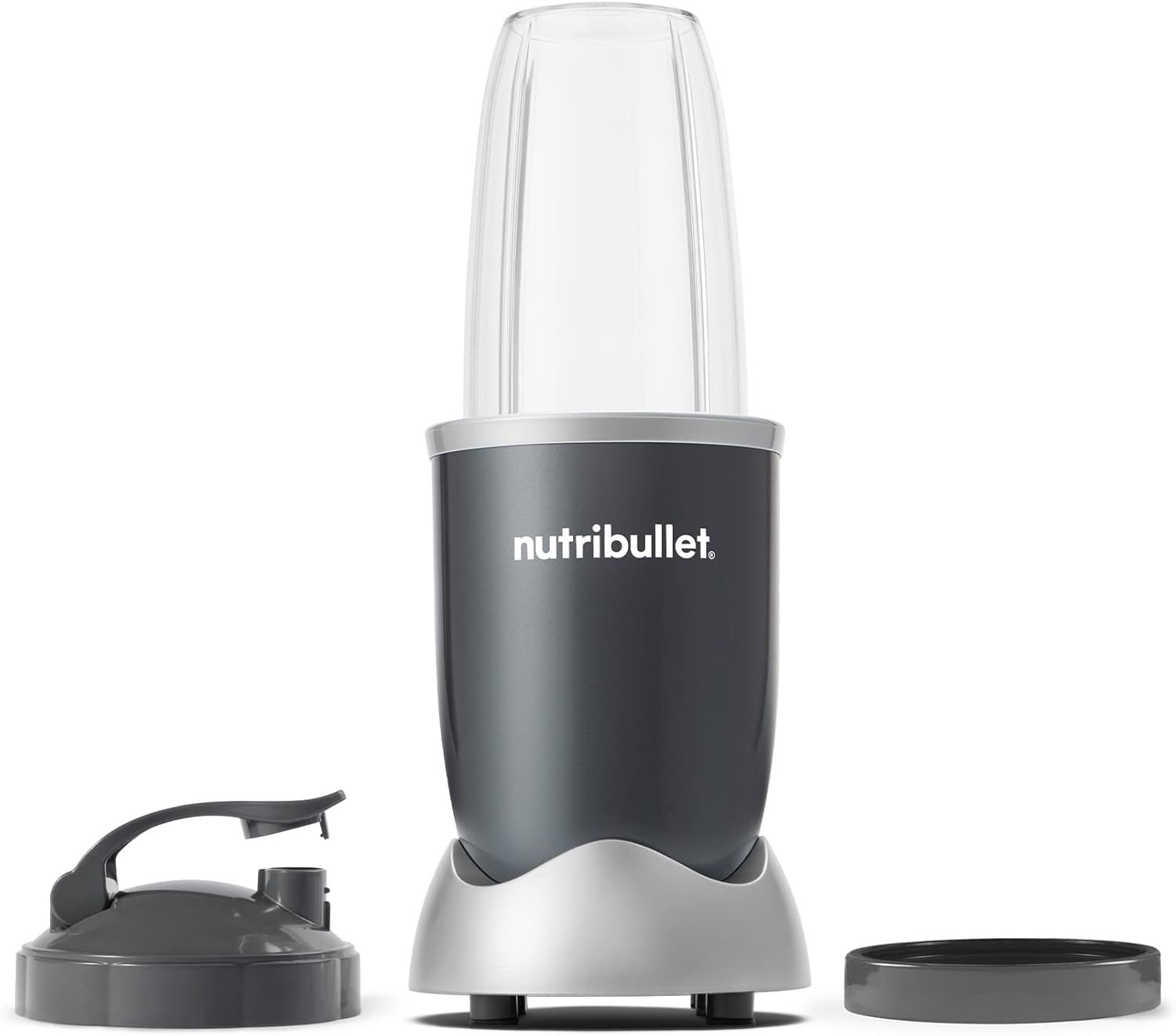
If you’ve ever stood in the blender aisle — physical or digital — trying to decode whether 900 watts is meaningfully better than 700 watts, you’re not alone. Personal blenders (compact, single-serve machines designed to blend directly into a cup you drink from) are marketed almost entirely on wattage, and wattage alone is one of the least useful numbers on the box. What actually predicts whether your blender will crush frozen açaí, pulverize a tablespoon of flaxseed, or die quietly after four months of daily use comes down to a small cluster of specs that most product listings bury or omit entirely. This guide cuts to those specs — what they mean, how they interact, and exactly how to use them as a decision filter when you’re comparing two or three machines side by side.
| EDITOR'S PICK[Ninja Nutri-Plus Personal Blend…](https://www.amazon.com/dp/B08QZWDLP4?tag=greenflower20-20) | Mid-tier[Ninja Nutri-Blender Pro with Au…](https://www.amazon.com/dp/B08QXJ31WR?tag=greenflower20-20) | Budget pick[Ninja Fit Compact Personal Blen…](https://www.amazon.com/dp/B01FHOWYA2?tag=greenflower20-20) | |
|---|---|---|---|
| Peak Wattage | 900 W | 1100 W | 700 W |
| Cup Size(s) | 20 oz. | 24 oz. | 16 oz. |
| Cups & Lids | 3 cups, 3 lids | 2 cups, 2 lids | 2 cups, 2 lids |
| Blend Controls | Push to Blend | Auto-iQ | Push to Blend |
| Price | $89.99 | $74.99 | $59.00 |
| See on Amazon → | See on Amazon → | See on Amazon → |
Why Wattage Is a Marketing Number (and What to Read Instead)
Let’s start with the stat everyone leads with: wattage. Wattage measures how much electrical power a motor draws, not how much mechanical power it delivers to the blade. The gap between those two things is motor efficiency, and it varies enormously across price tiers. A 1,200-watt motor in a $45 personal blender can deliver less usable torque at the blade than a well-engineered 900-watt motor in a $130 machine.
The more useful number is peak horsepower (HP) — the maximum mechanical output the motor can sustain under load. Published specs from Vitamix, Ninja, and Oster consistently report peak HP alongside wattage, and reviewers at Wirecutter note it’s a better predictor of how a blender handles dense, fibrous loads like frozen banana, hemp seeds, or raw kale stems.
By the numbers: wattage vs. real-world capacity
| Machine tier | Typical wattage | Typical peak HP | Handles frozen fruit daily? |
|---|---|---|---|
| Entry personal (~$40–$70) | 300–600W | 0.5–0.75 HP | Sometimes, inconsistently |
| Mid personal (~$90–$150) | 700–1,000W | 1.0–1.5 HP | Yes, reliably |
| Premium personal (~$150–$300) | 1,200–1,500W | 2.0–2.5 HP | Yes, including ice and dense powders |
The second number worth tracking is blade tip speed, which is a function of both motor RPM and blade diameter. Serious Eats’ blender buying guide notes that blade geometry — specifically the angle and number of blade edges — determines how efficiently a given RPM translates into actual shear force. A narrow, tall blending jar forces ingredients into the blade repeatedly (the Vitamix Personal Cup design does this deliberately), while a wide-bottomed cup can leave pockets of unblended material near the walls regardless of motor power.
Container Geometry: The Spec Nobody Puts on the Box
This is where practitioner-level understanding separates genuinely useful blenders from expensive disappointments. Container geometry — the shape, volume, and taper of the cup — is arguably more important than motor power for single-serve blending, and it’s almost never specified in a way that makes cross-shopping easy.
Here’s the core principle: for a personal blender, smaller and narrower is usually better. Unlike full-size countertop blenders where a 64-ounce jar creates a vortex that pulls ingredients down continuously, a personal blender’s cup is inverted during blending. Gravity works with you. The tighter the taper toward the blade assembly, the more consistently ingredients contact the cutting edges. This is why owners of the NutriBullet Pro (600W, 32 oz cup) consistently report cleaner blends on frozen fruit than owners of some 1,000-watt competitors with wider, flatter cup profiles — the geometry does more work than the motor.
Practical implications for your buying decision:
- 32 oz is the sweet spot for single-serve performance. Larger cups (24 oz to 32 oz) work well. The 18 oz travel cups some machines include are ergonomically convenient but can underperform on dense stacks because there’s less liquid to create hydrostatic flow around the blade.
- Wide-mouth cups (easier to load ingredients into) tend to have flatter blade zones; owners in long-run reviews note they require more liquid to blend cleanly.
- Tall, narrow cups (like NutriBullet’s classic design and the Ninja Nutri Pro series) force the blend column to stay tight, which helps with fibrous inputs like chard stems, frozen berries with seeds, and protein powder clumps.
Container material also matters if you’re blending daily. BPA-free Tritan plastic is the industry standard at entry and mid tiers — it resists odor absorption better than standard polycarbonate and holds up to acidic ingredients (citrus, pineapple) without clouding. Stainless steel cups, offered by Oster’s Pro-series and a few Ninja configurations, are more durable and don’t retain flavor, but they’re heavier and you can’t visually check your blend progress. Consumer Reports’ blender ratings consistently flag cup durability (cracking at the blade collar, lid warping) as the primary long-term failure mode for personal blenders, which is worth weighing against initial price.
Blade Assembly and Drive Coupling: The Real Wear Points
The blade-to-cup interface is where most personal blenders eventually fail, and it’s the spec category that gets the least airtime in standard buying guides. There are two components to understand: the blade assembly (the cutting unit that screws into the cup) and the drive coupling (the plastic or metal connector between the blade assembly and the motor shaft).
Drive couplings on entry-tier machines ($40–$70) are almost universally plastic. Wirecutter’s personal blender coverage notes that plastic couplings are the most commonly cited point of failure in long-run user reviews — typically between 6 and 18 months of daily use. The failure mode is gradual: first you notice the blade spinning slightly off-center, then the blend quality drops, then the coupling strips entirely. Mid-tier machines like the NutriBullet Pro 900 and Ninja Nutri Pro use reinforced plastic couplings that owners report lasting 2–3 years of daily use. The Vitamix Personal Cup Adapter (which mounts a personal cup on a full Vitamix base) uses a metal-core coupling and is spec’d for commercial-adjacent use cycles.
For a smoothie stacker running one to two blends per day, the practical takeaway is:
- Under $80: Expect to replace the blade assembly (most manufacturers sell these as accessories) within 12–18 months. Factor that into your cost math. A $50 blender plus two $15 blade replacements over two years costs $80 — roughly equivalent to a $90 mid-tier machine that owners report running without replacement parts.
- $90–$150: Reinforced couplings become the norm. This is the tier where daily-use reliability becomes consistent rather than hit-or-miss.
- $200+: Metal couplings, commercial-grade blade steel, and in some cases self-detect motor protection (the Ninja Foodi Power Nutri series and Vitamix’s personal adapter both include thermal protection that cuts power before overheating damage occurs). Bon Appétit’s blender coverage identifies thermal overload protection as one of the clearest indicators of a machine engineered for sustained use rather than occasional blending.
Speed Settings and the Case Against Single-Speed Machines
Most personal blenders in the sub-$100 tier are single-speed: you push down, it runs at full power. For simple frozen-fruit blends with adequate liquid, single-speed is fine. For smoothie stacking — layering multiple texture classes (frozen fruit, fresh greens, protein powder, nut butter, seeds) — the inability to pulse or ramp up creates a specific problem: powder incorporation.
Protein powders and superfood powders (thinking Sunwarrior Warrior Blend, Laird Superfood Creamer, Four Sigmatic mushroom blends) behave differently from frozen fruit. They’re hydrophobic to varying degrees, they clump, and they respond poorly to being blasted at full speed before they’ve had a chance to hydrate and disperse. On a single-speed machine, the result is powder pockets — dry clumps that survive the blade cycle and end up in your last few sips.
Variable speed or at minimum a pulse function solves this. Pulse allows a short burst at full power followed by rest, which lets the liquid slosh back over unincorporated material. Owners of the Ninja Nutri Pro and similar machines with a dedicated pulse mode consistently report cleaner powder incorporation compared to fixed-speed competitors at the same price point.
The three-speed or dial-variable configurations on premium personal blenders (Ninja Foodi Power Nutri DUO, Vitamix Personal Cup system) give you a genuine low-speed option for pulsing in powders before ramping to full blend. For performance-nutrition stackers running complex recipes, this is worth paying for.
The If/Then Decision Matrix
Here’s where to land based on what you’re actually building:
If you blend once a day, primarily frozen fruit and spinach, and your budget is under $80: The NutriBullet Pro 600 or 900 is the category benchmark for good reason. Published specs, aggregated review data, and owner long-run reports all converge on these as the most reliable performers in their tier. Accept that you’ll likely replace the blade assembly around the 18-month mark.
If you run two or more blends daily, stack protein powder and superfoods regularly, or want a machine that keeps up with a serious wellness protocol for 3+ years without parts replacement: Step up to the $120–$160 tier. The Ninja Nutri Pro (1,500 peak watts, reinforced coupling, pulse mode) and the Oster Blst Pro series are the machines reviewers keep returning to at this price point. The pulse mode alone justifies the price difference if you’re running powders.
If you’re already invested in a Vitamix ecosystem, or you need commercial-adjacent durability for small-batch prep or a boutique context: The Vitamix Personal Cup Adapter is the answer, not a new standalone personal blender. It uses the motor base you already own, brings metal-core build quality, and the 20 oz cup geometry is specifically optimized for the Vitamix vortex pattern. Spec sheets put peak output at 2+ HP. The cost is significantly lower than a second full blender, and the reliability record in long-run operator reviews is stronger than any standalone personal blender in the sub-$300 tier.
If you’re on a true budget and need to get started now: A 600W entry machine is fine for a simple daily blend. Just don’t run dry, don’t run fibrous materials without adequate liquid, and replace the blade assembly proactively before the coupling fails. The machine isn’t wrong for you — you just need to use it within its actual design envelope.
The specs that matter are motor efficiency (expressed as peak HP, not raw wattage), container taper geometry, drive coupling material, and whether the machine has a pulse or variable speed mode. Everything else on the label is marketing surface area. Read those four things, match them to your actual use pattern, and the right machine becomes an obvious choice rather than a guess.