You’ve probably heard that fruit smoothies “spike your blood sugar.” That concern isn’t wrong, but it’s also not the whole story — and it’s definitely not a reason to abandon your blender. The key concept to understand is glycemic load (GL): a number that captures not just how fast a food raises blood sugar (that’s the older, simpler glycemic index), but also how much of the carbohydrate is actually in a real-world serving. A food can have a high glycemic index but a low glycemic load if the serving size is small — watermelon is the classic example. When you build a smoothie thoughtfully, you’re assembling ingredients whose individual GLs either stack against you or work together to keep the whole drink in a range your body can manage steadily. This article shows you exactly which swaps move the needle, why they work, and how to make those decisions without turning breakfast into a spreadsheet exercise.
Why Glycemic Load Is the Number That Actually Matters in a Blended Drink
Glycemic index (GI) ranks foods on a scale of 0–100 based on how quickly 50 grams of their carbohydrates hit your bloodstream relative to pure glucose. The problem: 50 grams of carbohydrate from watermelon requires eating about 5 cups of fruit. Nobody does that. Glycemic load corrects for this by multiplying the GI by the actual grams of carbohydrate in your serving, then dividing by 100.
GL = (GI × grams of net carbs in serving) ÷ 100
Harvard T.H. Chan School of Public Health’s Nutrition Source defines a GL under 10 as low, 11–19 as medium, and 20+ as high. For reference, a single Medjool date — a common smoothie sweetener — contributes a GL of roughly 18 on its own. Two dates plus a banana plus mango juice can push a single blended drink above GL 40 before you’ve added any other ingredients. That’s a lot of blood-sugar work for your pancreas to do at 7 a.m.
The good news: blending is actually one of the more controllable food-preparation formats. You choose every gram that goes in. The swaps below are organized by the category of ingredient they address, with the tradeoffs named explicitly so you can make the right call for your own goals.
Fruit Swaps: Where Most of the GL Lives
Fruit is typically 60–80% of a smoothie’s carbohydrate mass, which makes it the highest-leverage place to intervene.
High-GL fruits to watch
| Fruit (½ cup serving) | Approx. GI | Approx. GL |
|---|---|---|
| Mango (fresh) | 51 | ~8 |
| Banana (ripe) | 62 | ~12 |
| Pineapple | 59 | ~7 |
| Dates (1 Medjool) | 55 | ~18 |
| Grapes | 59 | ~8 |
Sources: Harvard T.H. Chan School of Public Health Nutrition Source; USDA FoodData Central estimates.
A ripe banana contributes a GL of ~12 per half-cup — that’s already in the medium range before anything else lands in the jar. Two common smoothie mistakes: using a fully ripe banana (the starch has converted almost entirely to sugar, pushing GI higher) and using juice as the liquid base (grape or mango juice adds GL with no fiber buffer).
Lower-GL fruit alternatives that still blend well
Frozen wild blueberries are one of the most GL-efficient fruits you can blend. Per-half-cup GL sits around 5, and their smaller cell structure means a mid-range blender like the Ninja Professional handles them cleanly without the ice-y texture chunks you can get from larger frozen fruit. Per Nutrition Journal research on dietary fiber and postprandial glucose response, the anthocyanin-rich skin of blueberries contributes fiber that further slows glucose absorption — a double benefit.
Green-tipped (underripe) bananas are a meaningful upgrade over spotted-ripe ones. The resistant starch hasn’t converted yet, dropping the effective glycemic impact noticeably. Texture tradeoff: they blend slightly less smooth, so if your blender is below the ~1,400-watt range, add 2 tablespoons of liquid per banana to compensate.
Frozen raspberries and blackberries have GL values in the 3–5 range per half-cup, plus among the highest fiber-per-calorie ratios of any blendable fruit. The seeds can challenge personal-cup blenders (NutriBullet-class, ~600 watts); owners of full-size containers with wider blade assemblies — Vitamix Ascent, Blendtec Designer series — report much cleaner emulsification.
Swap rule #1: Replace half the banana volume with frozen raspberries or green-tipped banana. Net GL reduction on a 16-oz smoothie: typically 6–10 GL points. Flavor shift is mild; texture becomes slightly thinner, which most liquid bases compensate for.
Liquid Base Swaps: The Silent GL Multiplier
This is where a lot of practitioners quietly undermine an otherwise well-tuned recipe.
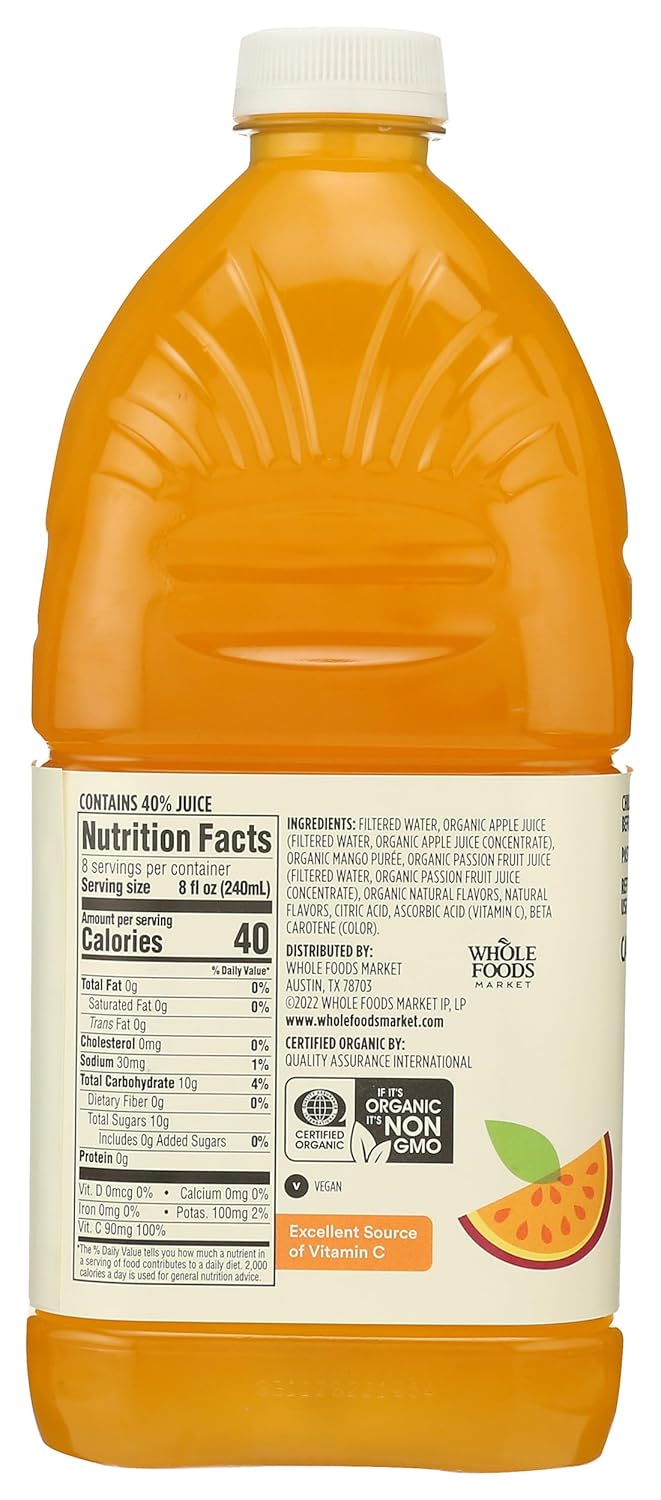
Fruit juice as a base adds carbohydrate mass with essentially zero fiber, which means its GI translates almost directly to GL with no mitigation. Eight ounces of orange juice contributes a GL of roughly 12–14 on its own. The Academy of Nutrition and Dietetics notes in their carbohydrate guidance that consuming fruit in whole or blended form consistently results in lower postprandial glucose responses than consuming equivalent calories as juice, precisely because the fiber matrix is preserved in the former.
Unsweetened almond milk (30 calories per cup, ~1g net carbs): GL contribution is effectively zero. Texture result is thinner and lighter — ideal for green smoothies or protein-forward builds where you don’t want the base competing with other flavors.
Full-fat coconut milk (canned, diluted 1:1 with water): GL contribution is near zero; fat content (roughly 11g per quarter-cup) slows gastric emptying and buffers the glycemic response of everything else in the blend. This is the liquid base recommended most often in performance-nutrition contexts. Laird Superfood’s coconut creamer products use a similar logic — medium-chain triglycerides (MCTs) from coconut provide fast fuel without a carbohydrate-driven insulin response.
Swap rule #2: Replace juice bases with unsweetened nut milk or diluted coconut milk. GL reduction: 10–15 points on a standard 16-oz build. If creaminess matters to you, full-fat coconut milk (diluted) beats almond milk by a wide margin without adding carbohydrates.
Sweetener and Additive Swaps: Small Volume, High Impact
Dates, honey, and agave — the usual suspects
One Medjool date adds approximately 18g net carbs and a GL of 18. Honey (1 tablespoon) contributes GL ~11. Agave is often marketed as “low GI” because it’s high in fructose, but the Academy of Nutrition and Dietetics and most registered dietitians caution that high fructose intake routes directly to hepatic fat synthesis — a different metabolic problem than glucose spike, not a solution to it.
Lower-GL sweetener options
Monk fruit concentrate (liquid): Zero glycemic impact. It’s 150–200× sweeter than sucrose, so a few drops are enough. Pairs well in tropical fruit builds where you’re already working with mango or pineapple at reduced volume. No textural contribution — purely sweetness correction.
Raw cacao nibs (1 tablespoon): GL ~1, adds a bitter-chocolate note, contributes magnesium and flavanols. Works especially well in berry-based builds. Caveat: they don’t break down fully in personal-cup blenders — a Vitamix or Blendtec at full speed handles them cleanly; a NutriBullet Pro at ~900 watts will leave small crunchy fragments, which some people enjoy but others don’t.
Cinnamon (Ceylon, ¼ teaspoon): Zero glycemic impact; Examine.com’s research summary on blood glucose modulation notes several studies suggesting cinnamon supplementation is associated with modest improvements in fasting glucose and insulin sensitivity, though effect sizes are variable. It’s not a miracle, but at zero cost and zero GL, it’s a reasonable add.
Protein powder choices affect GL more than you think
Many flavored protein powders — especially mass-market whey concentrates — are sweetened with maltodextrin, which has a GI of 85–110 (higher than glucose). A two-scoop serving can add GL 8–12 without appearing on the front label. Sunwarrior’s Warrior Blend and Four Sigmatic’s protein blends use monk fruit or low-glycemic sweeteners; checking the ingredient list for maltodextrin before purchasing is worth the 30 seconds.
Swap rule #3: Audit your protein powder’s sweetener before assuming it’s GL-neutral. If maltodextrin appears in the first five ingredients, switch to an unsweetened or monk fruit–sweetened option. Net GL savings: 8–12 points per serving.
Fiber and Fat as Structural GL Modulators
This is the practitioner-level move that separates a well-designed smoothie from one that’s just “healthy ingredients blended together.”
Fiber slows gastric emptying and the rate of glucose absorption. Per the Nutrition Journal’s research on dietary fiber and glycemic control, soluble fiber specifically — the kind found in oats, chia seeds, and flaxseed — forms a viscous gel in the gut that blunts the glucose curve of everything consumed alongside it. One tablespoon of ground flaxseed adds ~2g soluble fiber and a GL of essentially 0. Two tablespoons of chia seeds add ~4g fiber, ~5g fat, and a GL near 1.
Fat plays the same gastric-emptying role. Half an avocado adds ~15g of monounsaturated fat, contributes a creamy texture that mid-range blenders handle well, and contributes a GL of about 1. It’s one of the most efficient GL-mitigation tools available in a smoothie context — the fat content alone is enough to blunt the glucose response of a moderately high-GL fruit base.
By the numbers — GL comparison, 16-oz smoothie:
| Build | Estimated Total GL |
|---|---|
| Mango juice base + ripe banana + honey + whey with maltodextrin | ~48 |
| Almond milk base + frozen raspberries + green banana + chia + monk fruit protein | ~14 |
| Coconut milk base + wild blueberries + avocado + flax + cacao nibs | ~9 |
The difference between the first and third build is not about eating less or enjoying your smoothie less. It’s purely ingredient architecture.
The Decision Rule
Here’s the framework, stated plainly:
If your primary goal is blood sugar stability (performance recovery, sustained morning energy, managing insulin sensitivity): prioritize liquid base first (cut juice, use unsweetened nut milk or diluted coconut milk), then fruit swap (berries over tropical fruit, green banana over ripe), then add one fat source (avocado or coconut milk), then audit your protein powder’s sweetener. These four moves alone typically bring a high-GL smoothie below GL 15.
If you want maximum GL reduction with minimal flavor disruption: replace dates/honey with liquid monk fruit, sub frozen wild blueberries for half your tropical fruit, and add 2 tablespoons of chia. You’ll land in the GL 8–12 range without changing the drink’s character significantly.
If you’re building for an athlete with high carbohydrate demand: GL management is less critical than total carbohydrate adequacy. In that case, a ripe banana and some pineapple is fine — focus your ingredient intelligence on protein bioavailability and electrolyte density instead.
The smoothie that keeps working for you is the one whose glycemic load matches what you actually need from it — not the one that scores lowest on a chart. Tune accordingly.